
Whispers in the Snow: The Saga of Simo Häyhä
In the twilight of his years, nestled in the serene embrace of a Finnish nursing home, Simo Häyhä gazed out of the frost-kissed window, his eyes reflecting the tranquil snowscapes that had been the stage of his legendary past. He was a man whose name resonated with the echoes of a bygone era, a name that stirred the soul of Finland and whispered tales of courage across the globe.
Simo’s journey was not one of mere heroics; it was a tapestry of silent endurance, unwavering duty, and a profound connection to the land that shaped him. Born in the rural heartland of Finland, his early life was marked by simplicity and harmony with nature. The forests were his playground, the wilderness his mentor, shaping his skills as a marksman and hunter. These skills, honed through years of quiet observation and practice, would later forge him into a figure of mythic proportions.
As the world around him plunged into the turmoil of war, Simo remained anchored in his profound sense of duty. His recruitment into the Finnish Army was not a call for adventure or glory but a solemn undertaking to defend his homeland. The Winter War, a brutal conflict against an overwhelming adversary, became the crucible that transformed this unassuming farmer into ‘The White Death,’ a sniper of unparalleled skill and stealth.
Yet, as the years ebbed away, Simo Häyhä found himself grappling with the duality of his legacy. The quiet farmer and the lethal sniper coexisted within him, a reminder that heroes are not born from the desire for fame but from the depths of sacrifice and resilience. This is the story of a man who became a legend, not by choice, but by the sheer force of circumstance and character.

Chapter 1: The Roots of a Warrior
In the early 1900s, in the humble village of Rautjärvi, near the present-day border of Finland and Russia, Simo Häyhä was born into a world far removed from the mechanized chaos of modern warfare. His childhood was an idyllic chapter, written in the lap of nature, where the rhythm of the seasons governed the lives of the villagers. Born to a farmer’s family, Simo’s life was intertwined with the earth, the forests, and the clear, open skies.
From a young age, Simo showed an innate affinity for the outdoors. He would spend hours in the forest, learning to read the language of the land. His father, a skilled hunter, was his first mentor, teaching Simo the nuances of tracking and shooting. In these early years, Simo developed not just as a marksman, but as a student of patience and perseverance. The long Finnish winters and the rugged landscape were his tutors, ingraining in him a resilience that would later define his character.
Simo’s adolescence was marked by the Finnish spirit of ‘sisu’ – a concept that encompasses stoicism, determination, and bravery in the face of adversity. This cultural ethos was the bedrock upon which his personality was built. His unassuming nature and quiet demeanor belied a steely resolve and a fierce sense of independence.
When Finland declared independence from Russia in 1917, it ignited a spark of patriotic fervor across the nation. Simo, then a young man, felt this surge acutely. However, his sense of duty was not to be mistaken for blind nationalism. For Simo, the love for his country was deeply personal, rooted in the very soil he had walked since childhood.
The 1920s and 1930s were a period of relative peace, but the undercurrents of change were palpable. Simo, like many of his generation, watched with a wary eye as the political landscape of Europe shifted ominously. In 1925, he enlisted in the Finnish Army, not out of a desire for adventure, but out of a sense of responsibility to protect the land he held dear. His time in the military was a formative experience, honing his skills with a rifle and introducing him to military tactics. However, it was his innate abilities, the ones nurtured in the silent woods of Rautjärvi, that set him apart.
As the decade wore on, the shadow of conflict loomed ever closer. The world was hurtling towards a cataclysmic confrontation, and Finland, with its strategic location, was not immune to these tides of change. In 1939, as the drums of war began to beat louder, Simo Häyhä, a farmer at heart, prepared to defend his homeland. Little did he know, his actions in the coming years would etch his name into the annals of history, not as a harbinger of death, but as a guardian of his people.

Chapter 2: The Winter War Begins
As 1939 drew to a close, the fragile peace that had enveloped Europe shattered. The Soviet Union, seeking to secure its western borders, cast its gaze upon Finland. For Simo Häyhä, now a seasoned soldier, the brewing storm was a call to arms—a duty to protect the land that had nurtured him.
November 30, 1939, marked the onset of the Winter War. The Soviet forces, confident in their numerical superiority, anticipated a swift victory. But Finland, with its resilient spirit and intimate knowledge of the terrain, was not to be underestimated. Simo, assigned to the 6th Company of JR 34 on the Kollaa River, was among those who stood ready, a silent sentinel in the snow.
The Kollaa front was a brutal theater of war. Temperatures plummeted, and the landscape transformed into a white expanse, both beautiful and treacherous. For Simo, this environment was familiar, almost comforting. He donned his white camouflage, blending seamlessly into the snowy terrain, and embarked on his solitary mission.
Simo’s role as a sniper was more than just a military tactic; it was a personal crusade. With every breath he took, every heartbeat that echoed in the silence of the forest, he was the embodiment of Finland’s resolve. His rifle, a Mosin-Nagant, became an extension of his will, each shot a message to the invading forces that this land would not yield easily.
In the ensuing weeks, Simo’s legend began to take shape. He moved like a ghost through the winter landscape, his presence felt only in the abrupt cessation of Soviet soldiers’ breaths. His method was meticulous; he used iron sights, eschewing the tell-tale glint of a scope, and compacted the snow in front of his position to avoid a puff of snow with each shot. He even kept snow in his mouth to prevent his breath from condensing and revealing his position.
The tales of his exploits spread like wildfire, both among the Finnish ranks and the enemy. The Soviets, bewildered and demoralized by the unseen threat, dubbed him ‘The White Death.’ To them, he was a specter of the wilderness, a force as relentless and unforgiving as the winter itself.
Yet, amidst the accolades and the growing mythos, Simo remained grounded. He did not see himself as a hero; he was a soldier doing his duty, defending his homeland against overwhelming odds. His resolve was not driven by a lust for glory but by a deep-seated sense of right and wrong.
As the Winter War raged on, Simo’s tally of confirmed kills grew, but so did the toll on his body and spirit. The harsh conditions, the constant vigilance, and the weight of lives taken began to etch themselves into his being. He was not just fighting an external enemy but also battling the internal conflict that comes with being an instrument of war.
The Winter War was a testament to Finland’s resilience and Simo Häyhä’s extraordinary skill. But it was also a chapter in Simo’s life that highlighted the complex, often painful path of a true warrior—a path marked not by the pursuit of personal glory but by the sacrifices made in the name of something greater.

Chapter 3: The Sniper’s Shadow
As the Winter War waged on, Simo Häyhä’s reputation as ‘The White Death’ reached legendary status. He was not merely a soldier in the Finnish army; he became a symbol of the nation’s indomitable spirit. Within the chilling embrace of the Finnish winter, Simo continued his solitary campaign, a shadow among the snow-laden trees.
The sniper’s role is one of isolation and patience, qualities that Simo embodied naturally. His days were spent in the silent watchfulness, eyes scanning the horizon, finger poised over the trigger of his Mosin-Nagant. Every shot he took was a culmination of years of practice and an intimate understanding of the land. His sniper’s nest, carefully chosen for its vantage point and concealment, became his world, a small sphere where life and death were decided in mere moments.
Simo’s technique was a blend of innate skill and learned tactics. He preferred the iron sights over a telescopic scope to reduce the risk of detection by sunlight reflection. His breaths were calm and measured, even in the biting cold, ensuring that each shot was as accurate as possible. He often packed snow around his position to muffle the sound and prevent any visible puffs of snow when he fired.
The toll of Simo’s actions on the Soviet troops was immense, both in terms of casualties and morale. His presence created an atmosphere of fear and uncertainty. The Soviets knew that in the vast white expanse of the Finnish wilderness, the White Death was always watching, always waiting. In response, they deployed counter-snipers and artillery barrages, attempting to eliminate the unseen menace. But Simo’s deep understanding of the terrain and his extraordinary survival skills made him an elusive target.
Despite the grim nature of his task, Simo remained detached, viewing his role through a pragmatic lens. To him, each shot fired was a necessary act in the defense of his homeland. He did not revel in the act of killing; it was a duty carried out with the precision and seriousness it warranted.
In the quiet moments, when the gunfire ceased and the world around him fell silent, Simo grappled with the solitude of his role. The weight of life and death on his shoulders was a heavy burden, one that he bore with a stoic sense of responsibility. The loneliness of the sniper was not just physical; it was a mental isolation, a necessary barrier between himself and the harsh realities of war.
As the Winter War progressed, Simo’s tally of confirmed kills rose, cementing his status as one of the most effective snipers in military history. Yet, with each passing day, the man behind the legend remained veiled in the solitude of his thoughts. Simo Häyhä, the farmer, the hunter, the soldier, continued his silent vigil, a guardian spirit in the frozen forests of Finland.
His story, however, was not just a tale of military prowess; it was a reminder of the human cost of war, of the sacrifices made by those who stand in defense of their homeland. In the annals of history, Simo Häyhä’s legacy would be remembered not just for the lives he took, but for the unwavering spirit he represented.
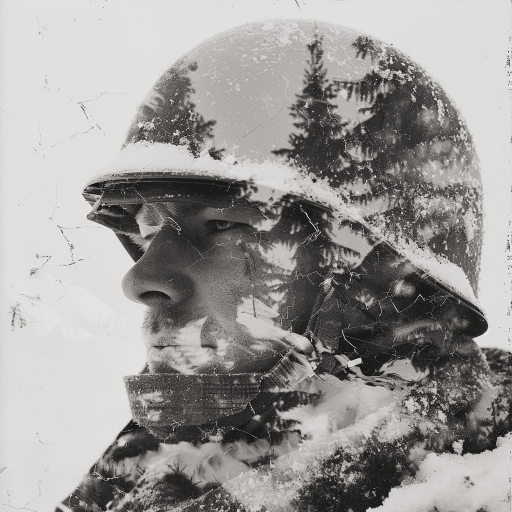
Chapter 4: The Final Stand
As the Winter War reached its zenith, the harshness of the conflict intensified. For Simo Häyhä, every day on the Kollaa front was a testament to his resilience and an unyielding commitment to his country. Amidst the artillery fire and the relentless assaults, he remained a steadfast defender, a silent warrior cloaked in the whiteness of the Finnish winter.
The conditions on the front were brutal. Temperatures often plummeted to below freezing, turning the landscape into a frozen wasteland. The soldiers, both Finnish and Soviet, battled not only each other but also the unforgiving environment. For Simo, this harsh climate was a familiar adversary, one he had learned to respect and navigate from his youth. His endurance in these extreme conditions was as much a weapon as his rifle.
March 6, 1940, marked a pivotal moment in Simo’s journey. While engaged in one of his routine scouting and sniping missions, he encountered a Soviet counter-sniper. The ensuing duel was a harrowing game of cat and mouse, a battle of wits and patience between two lethal marksmen. But in this deadly dance, Simo emerged as the victor, reinforcing his fearsome reputation.
However, the war was taking its toll on Simo. The continuous strain of combat, the responsibility of being a crucial figure in the defense efforts, and the mental burden of his role began to wear on him. Even the strongest of spirits can fray in the face of relentless adversity.
On March 12, 1940, Simo’s war came to an abrupt and violent end. A Soviet explosive round struck him, causing severe facial injuries. His comrades found him unconscious, his face a mask of blood. The man who had become an embodiment of the Finnish resistance, who had faced death countless times, now lay at its door.
Miraculously, Simo survived. He was transported to a field hospital, where he began the slow, painful process of recovery. His survival was a beacon of hope to his fellow soldiers, a testament to his indomitable will. But the war he had fought so valiantly had left its indelible marks, not just on his body but on his soul.
The Winter War concluded on March 13, 1940, with the Moscow Peace Treaty. Simo Häyhä, the White Death, had played a crucial role in the defense of Finland. His actions during the war were a testament to the power of individual skill, determination, and courage in the face of overwhelming odds.
Simo’s return to civilian life was a journey back to his roots, to the quiet existence of a farmer. The war had changed him, as it had changed the world. The legend of The White Death would live on in military history, but for Simo, the man, the war was a chapter that he closed with humility and a deep personal understanding of the cost of freedom.
In the annals of history, Simo Häyhä would always be remembered as a hero, not for the fame or the glory, but for his unwavering dedication to his country and the sacrifices he made in its defense.
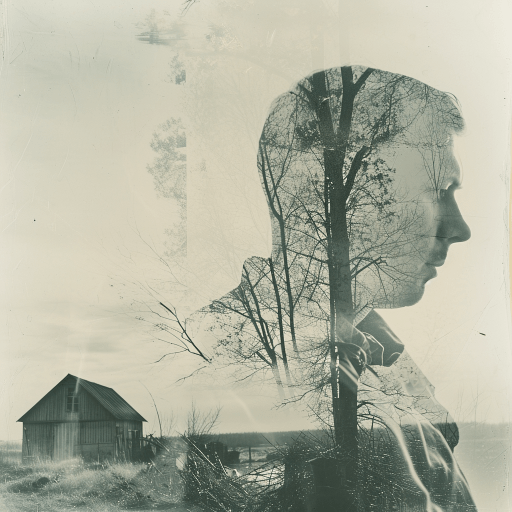
Chapter 5: The Silent Aftermath
The end of the Winter War marked the beginning of a new chapter in Simo Häyhä’s life, one far removed from the gunfire and the icy trenches of the Kollaa front. The war had ended, but its echoes lingered in Simo’s mind, a constant reminder of the sacrifices and losses endured by so many.
Returning to his native Rautjärvi, Simo found solace in the familiar landscapes of his youth. The forests and fields, untouched by the scars of war, offered a sense of peace and continuity. Here, amid the quiet rhythms of rural life, Simo sought to rebuild his existence, far from the public eye and the burdens of his legendary status.
His injuries from the war had left physical reminders of his ordeal. The severe wound to his face required a long and painful recovery process. Despite the challenges, Simo’s resilience, a trait that had served him well during the war, remained steadfast. He approached his recovery with the same determination and quiet strength that had characterized his time as a sniper.
As Finland navigated the post-war period, Simo’s exploits became the stuff of national legend. His incredible tally of confirmed kills, over 500, made him a symbol of Finnish resistance and perseverance. Yet, Simo shied away from the spotlight. He did not see himself as a hero; he was a soldier who had done his duty, nothing more, nothing less.
Simo’s life after the war was a reflection of the man he had always been – unassuming, modest, and deeply connected to his roots. He returned to farming, embracing the simple, hardworking lifestyle he had known before the war. The land, with its unspoken promise of renewal and growth, was a balm to his war-weary soul.
In the ensuing years, Simo remained a private individual, rarely speaking of his wartime experiences. His reluctance to discuss the war was not born out of bitterness or trauma, but from a deep-seated belief that what had happened was a part of his duty to his country, not a personal achievement to be glorified.
Despite his reticence, Simo was not forgotten by the nation he had served. His legacy was honored in various ways, but the recognition seemed to sit uncomfortably with him. Simo’s view of his actions during the war was starkly different from the public perception. He did not consider himself a war hero but rather a man who had answered the call of his country in its time of need.
The solitude that Simo embraced in his post-war life was not just a preference but a necessity. It was in the quietness of his rural life that he found the space to reflect and to heal. The fame and accolades that came his way were met with a humble indifference. For Simo, true satisfaction came not from public recognition, but from the knowledge that he had stood firm in the face of adversity, loyal to his country and true to himself.

Chapter 6: Reflections in Solitude
As the years passed, Simo Häyhä’s life settled into a quiet rhythm, far from the tumult of his wartime past. In the solitude of his rural home, he found a sense of peace that had eluded him during the war. The fame that his extraordinary feats had brought him was a mantle he wore reluctantly, always preferring the simplicity of his everyday life.
In Rautjärvi, Simo cultivated a life of modesty and routine. He tended to his farm with the same dedication and precision that he had applied to his sniping skills. The land, with its cycles of growth and renewal, was a constant in his life, a reminder of the passage of time and the resilience of nature. His connection to the land was profound, rooted in his childhood and sustained through the years of conflict.
Simo’s choice to lead a solitary life was not born out of misanthropy but from a deep understanding of himself. He was a man of few words, his communication often non-verbal, a nod, a smile, or a thoughtful glance. Those who knew him described a man of great depth, a person who had seen the worst of humanity yet retained a quiet dignity and a gentle spirit.
His refusal to marry or seek companionship was a personal decision, one that he approached with the same thoughtful deliberation that had guided his actions during the war. Simo was content in his solitude, finding company in the rhythms of nature and the memories of his past.
Throughout his life, Simo remained an avid hunter and marksman, his love for the sport undiminished by the war. He participated in shooting competitions, not for the glory but for the love of the skill. His ability with a rifle remained unmatched, a testament to his enduring talent and dedication.
As the years turned into decades, Simo became a living legend, a symbol of a time when the fate of a nation hung in the balance. His story was taught in schools, a part of Finnish history that spoke of courage, skill, and resilience. Yet, the man himself remained an enigma, a figure who defied the usual trappings of fame and heroism.
In his later years, Simo’s thoughts often turned to the war, not with nostalgia but with a sober reflection on the cost of such conflicts. He had seen firsthand the devastation and loss that war brought, and his experiences had left him with a profound appreciation for peace and a deep-seated aversion to conflict.
Simo Häyhä’s legacy is not just that of a skilled sniper or a war hero but of a man who stood firmly by his principles, who faced the horrors of war with courage and returned to a life of peace with dignity. His story is a reminder that true heroism is not about seeking glory or recognition but about standing up for what one believes in, even in the face of overwhelming odds.
Epilogue: Echoes of a Hero’s Journey
In the quiet corridors of a Finnish nursing home, the aged figure of Simo Häyhä sat by a window, his gaze lost in the distant snow-covered landscapes. His life, a journey through tumultuous times, had come full circle, returning him to the serenity of his homeland. In these twilight years, his thoughts often wandered through the corridors of his past, each memory a thread in the rich tapestry of his life.
Simo’s story, from the humble beginnings in Rautjärvi to the legendary status he attained during the Winter War, was more than a tale of military prowess; it was a narrative of resilience, duty, and the complexity of heroism. His solitary life, post-war, was not a retreat from the world but a testament to his character, a choice that spoke of his understanding of fame and its fleeting nature.
As he reflected on his life, Simo considered the legacy he would leave behind. It was not the accolades or the records that he thought of, but the quieter moments, the connection to his land, and the principles he had stood for. His life was a cautionary tale about the allure of fame and glory, a reminder that true heroes are often those who shun the spotlight, choosing instead a path marked by personal convictions and quiet sacrifices.
Simo Häyhä’s journey through life, marked by both extraordinary feats and profound solitude, serves as a poignant reminder of the human cost of war and the enduring spirit of those who stand in its defense. His legacy, etched into the annals of history, whispers a profound truth: true heroism lies not in seeking glory, but in living a life true to oneself and one’s beliefs.
 Tangents Brand : Free Entertainment, no BS
Leave a comment