The Prompt
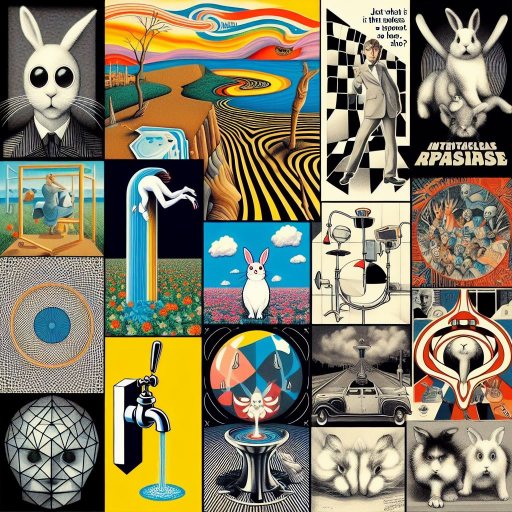
Bing prompt : neo-dada deep rabbit hole
Once again, this is when I bring you four different iterations of a prompt. That means I go to Bing and I hit generate four times. That gives four completely different versions of a prompt.
Neo-Dada in Art History
Neo-Dada is a movement that emerged in the 1950s and 1960s as a revival of the ideas and practices of the earlier Dada movement. It focused on the absurd and everyday objects, often incorporating elements of popular culture and mass media. Neo-Dada artists sought to challenge traditional notions of art and the role of the artist, often using unconventional materials and processes to create thought-provoking works.
Meaning and Significance
The term “neo” signifies a new or revived form of Dadaism, which was characterized by its anti-art and anti-establishment sentiments. Neo-Dada artists aimed to disrupt the conventional art world by blurring the boundaries between art and everyday life, often using humor and irony to provoke the audience. The movement embraced the concept of the readymade, where ordinary objects were presented as art, questioning the fundamental principles of artistic creation and consumption.
Impact on AI Generative Art
The principles of Neo-Dada can significantly influence AI generative art. AI art creators can utilize the spirit of absurdity, chance, and randomness central to Neo-Dada to push the boundaries of traditional artistic creation. By incorporating elements of popular culture, mass media, and everyday objects through AI-generated art, creators can challenge established norms and engage in a dialogue about the nature of creativity and authorship in the digital age.
AI art creators can explore the use of unconventional materials and methodologies with AI algorithms to produce unexpected and thought-provoking art pieces, reflecting the essence of Neo-Dada. By leveraging AI’s capacity for randomization and reinterpretation, artists can challenge preconceived notions of artistic expression and expand the possibilities of generative art in the contemporary context.


 Tangents Brand : Free Entertainment, no BS
Leave a comment