Echoes of Courage: Rose Freedman’s Legacy
In the heart of Manhattan, amidst the burgeoning skyscrapers and the relentless hum of industry, stood the Triangle Shirtwaist Factory. This bustling epicenter of the garment industry was a beacon of opportunity for many, a symbol of the American dream in the making. Among the hundreds of workers, predominantly young immigrant women, was Rose Freedman. Barely out of her teens, Rose’s eyes sparkled with the hope of a new life in this land of promise. She was a seamstress, her skilled hands deftly maneuvering through fabrics and threads, each stitch a step towards her aspirations. The factory, with its relentless pace and demanding hours, was a far cry from the future she envisioned, yet it was a beginning. Little did Rose know, her life and the future of labor rights and the feminist movement were on the cusp of an irreversible transformation. The date March 25, 1911, would soon be etched in history, marking a turning point born from tragedy, a catalyst for monumental change.

Chapter 1: Among the Needles and Thread
Rose Freedman’s days at the Triangle Shirtwaist Factory were a tapestry of ceaseless activity. Surrounded by rows of sewing machines, each a thunderous heartbeat in the factory’s body, Rose worked alongside a multitude of other young women. They were a mosaic of backgrounds and dreams, each drawn to the promise of America, each finding their place in the clatter and hum of the garment district.
The factory, perched on the upper floors of the Asch Building, was a world unto itself. Sunlight filtered through grimy windows, casting long, angular shadows that danced across the work tables. The air was thick with the scent of machine oil and fabric, a constant reminder of the unending demand for faster, cheaper production.
Rose’s fingers flew over the material, her mind often wandering to the world outside these walls. She dreamt of a future filled with opportunity, of a life beyond the relentless rhythm of the sewing machines. But these dreams were frequently interrupted by the stark realities of her environment. The work was grueling, the hours long, and the pay meager. The overseers, ever watchful, paced between the rows of workers, their eyes sharp for any sign of lagging pace or flagging energy.
Despite the hardships, there was a sense of camaraderie among the workers. They shared stories and laughter during the brief respite of lunch breaks, their voices a colorful symphony in the monotonous drone of the factory. They spoke in a mix of languages, their words a testament to the diverse tapestry of New York’s immigrant population.
Yet beneath this veneer of solidarity, there was an undercurrent of unrest. The workers were increasingly aware of the injustices they faced: the locked doors that kept them confined during work hours, the fines for minor infractions, the dangerous accumulation of fabric scraps and lint that littered the floors. Whispers of unionization, of strikes, began to circulate, fueled by the growing labor movement outside the factory’s walls.
Rose listened, her thoughts a whirlwind of uncertainty and hope. The idea of standing up against the factory owners was daunting, yet there was a fire kindling within her, a burning desire for something better, something just. She began to see the factory not just as a place of employment but as a battleground, a place where the fight for workers’ rights, for women’s rights, could take root.
In the evenings, as she made her way home through the bustling streets of the Lower East Side, the echoes of the day’s labor ringing in her ears, Rose felt a growing sense of purpose. The injustices at the factory were not just her struggles; they were the struggles of countless others. Her resolve strengthened with each step, each thought of the future she yearned for – a future where fairness and dignity were not just dreams but realities.
As winter turned to spring, the air in the factory grew heavier, the tensions higher. Change was on the horizon, though none could foresee the shape it would take. For Rose and her fellow workers, the year 1911 would bring not just challenges but a defining moment in their lives and in the fabric of American history.
Chapter 2: A Fateful Day
March 25th, 1911, dawned like any other Saturday for Rose Freedman and her colleagues at the Triangle Shirtwaist Factory. The air was crisp with the lingering chill of early spring, and the streets of New York bustled with the weekend’s energy. Unaware of the fate that awaited them, the workers filed into the factory, ready for another day of labor.
The morning passed in its usual flurry of activity. The rhythmic hum of sewing machines filled the air, a symphony of industry. Rose, her fingers deftly guiding fabric under the needle, was lost in thought. She pondered the discussions of unionization, the potential for change. There was a palpable sense of anticipation among the workers, a shared hope for a brighter future.
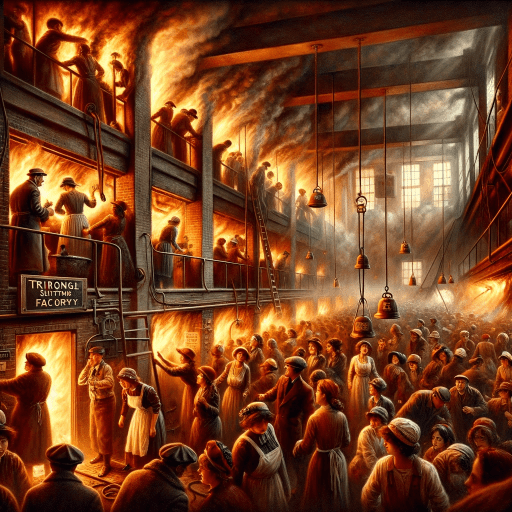
But as the clock neared the end of the workday, an unimaginable horror unfolded. A small fire, sparked by a discarded cigarette or match, ignited the piles of fabric scraps that littered the factory floor. In moments, the blaze grew into an inferno, fed by the flammable materials and exacerbated by the building’s inadequate safety measures.
Panic ensued as the workers realized their peril. The factory, notorious for its locked doors – a measure against theft and unauthorized breaks – became a deadly trap. The flames spread rapidly, engulfing the eighth, ninth, and tenth floors. Smoke filled the rooms, blinding and choking the frantic workers as they scrambled for escape.
Rose found herself amidst the chaos, her heart pounding with terror. The scene was nightmarish: colleagues struggling to open locked doors, windows too high to offer any hope of safe escape, fire escapes collapsing under the weight of desperate workers. The air was thick with the sound of screams and the crackling of fire.
In a moment of clarity amid the panic, Rose managed to reach a window. She looked down at the gathering crowd below, the distant wail of fire engines approaching. The realization that jumping was a certain death yet staying meant facing the flames tore at her soul. By some miracle, she spotted a firefighter maneuvering a ladder towards her location. With a leap of faith, she reached out, her fingers grazing the rungs as the heat of the fire scorched her back.
Rose’s escape was narrow, her survival a testament to both luck and determination. But as she stood outside, watching the factory burn, the true magnitude of the tragedy unfolded before her eyes. Bodies lay on the pavement, a grim testament to the choices her fellow workers had faced. The fire raged on, claiming 146 lives in its wake, a staggering loss that shook the city to its core.
In the days that followed, the city mourned. The Triangle Shirtwaist Factory fire became a symbol of industrial negligence and the exploitation of labor. For Rose, the fire was a transformative experience. The loss of her colleagues, the harrowing escape, and the stark revelation of the dangers they had all faced in their daily work ignited a fierce determination within her. She realized that her survival came with a responsibility: to be a voice for those who had perished, to fight for the change they had all dreamed of.

Chapter 3: The Aftermath
In the days following the Triangle Shirtwaist Factory fire, New York City was enveloped in a somber cloud of grief and outrage. The tragedy had laid bare the grim realities of industrial labor conditions, and the city reeled under the weight of collective mourning. Amid this tumult, Rose Freedman emerged not just as a survivor but as a witness – a voice that resonated with the pain and the plea for justice of those who had perished.
As the city grappled with the aftermath, public outcry crescendoed. The fire had exposed the appalling safety violations and the blatant disregard for workers’ lives by factory owners and city officials alike. Protests erupted across the city, a tidal wave of anger and demand for change. Union leaders, activists, and ordinary citizens united in their call for reforms. The streets of New York echoed with their chants, a chorus of defiance against the systemic exploitation that had led to such a catastrophe.
In this charged atmosphere, Rose found a new purpose. The trauma of the fire had left its indelible mark, but it had also ignited a fierce resolve within her. She attended meetings and rallies, her voice joining the multitude demanding accountability and reform. She spoke of the locked doors, the inadequate fire escapes, the inhuman working conditions – not as abstract injustices, but as lived experiences, as the very factors that had turned a workplace into a death trap.
Her testimony was powerful and poignant. In courtrooms and public forums, Rose recounted the events of that fateful day with a clarity and conviction that moved her listeners. She became an embodiment of the tragedy – a living reminder of the cost of indifference and greed. Her words were not just a recounting of horrors but a call to action, a demand for a world where no worker would ever again be subjected to such peril.
The impact of Rose’s advocacy was profound. Alongside other survivors and activists, she became a pivotal figure in the ensuing labor reform movement. The fire had brought to light the need for stringent safety regulations, fair labor practices, and the right of workers to unionize – issues that Rose and her fellow advocates championed tirelessly.
Their efforts bore fruit. In the years following the fire, New York State enacted some of the most progressive labor laws in the country at the time. These laws set standards for fire safety, factory inspections, and workers’ rights, serving as a model for other states and fundamentally altering the landscape of American labor rights.
For Rose, this period was a crucible of transformation. From a seamstress in a garment factory to a crusader for justice, her journey was emblematic of the larger struggle of the working class. Her experiences at the Triangle Shirtwaist Factory and her actions in its aftermath were not just a personal saga but a chapter in the collective narrative of American history – a narrative marked by tragedy but also by the resilience and courage of those who dare to challenge injustice.

Chapter 4: A Movement Ignites
In the wake of the Triangle Shirtwaist Factory fire, a powerful movement began to coalesce. This movement, born from the ashes of tragedy, was fueled by a collective awakening to the injustices endured by workers, particularly women, in the burgeoning industrial landscape of America. Rose Freedman, a survivor of the fire, found herself at the heart of this burgeoning movement, her personal loss and survival transforming into a powerful symbol of the need for change.
The fire had not only exposed the dire working conditions in factories but had also highlighted the vulnerability of female workers in an era where their rights were severely limited. Women, who had long been relegated to the margins of the labor force, began to assert their voices more forcefully. The tragedy at the Triangle Factory became a catalyst, galvanizing women across the nation to demand safer working conditions, fair wages, and the right to unionize.
Rose, with her firsthand experience of the fire’s horrors, became a key figure in this movement. She spoke at rallies and meetings, her words resonating with both grief and determination. Her story was not just a tale of survival; it became a rallying cry for all women seeking to assert their rights in an industrial society that had largely ignored them.
As the movement grew, it intersected with the burgeoning feminist movement of the early 20th century. Women like Rose, who had experienced the worst of workplace exploitation, brought a unique perspective to the fight for gender equality. They argued not just for the right to vote, but for broader societal changes that would ensure women’s safety and equity in all aspects of life, including the workplace.
This period saw significant strides in the organization of labor unions. Female workers, previously fragmented and without a collective voice, began to organize in earnest. The International Ladies’ Garment Workers’ Union (ILGWU), which had been active before the fire, saw a surge in membership and activism, propelled by the urgency of the tragedy. Rose, along with other survivors, lent her support to the union, recognizing it as a critical tool for effecting change.
The union movement, bolstered by the support of women like Rose, began to achieve significant victories. Strikes and negotiations led to better working conditions, higher wages, and recognition of workers’ rights. These victories were not just economic triumphs; they were symbolic milestones in the struggle for dignity and respect in the workplace.
Rose’s involvement in these movements was transformative, both for her and for the causes she championed. She had witnessed the worst of what unchecked industrialization could bring, and she dedicated herself to ensuring that such a tragedy would never happen again. Her activism was a testament to the power of individual voices in effecting collective change.
The legacy of the Triangle Shirtwaist Factory fire, and of Rose Freedman’s role in its aftermath, extended far beyond the immediate reforms it inspired. It marked a turning point in American labor history, a moment when the combined forces of the labor and feminist movements altered the course of the nation’s industrial and social landscape.

Chapter 5: The Ripple of Change
The aftermath of the Triangle Shirtwaist Factory fire rippled far beyond the streets of New York City, igniting a national conversation about workers’ rights, industrial safety, and the role of women in the workforce. Rose Freedman, having lived through the horror and emerged as a vocal advocate, found herself at the center of this transformative era. Her story, interwoven with the larger narrative of the labor and feminist movements, became a powerful symbol of the relentless pursuit of justice and equality.
The reforms initiated in the wake of the tragedy were groundbreaking. New York State, under the pressure of public outrage and the tireless campaigning of labor activists, enacted a series of laws that revolutionized industrial labor standards. These laws mandated fire safety measures, regular factory inspections, and limitations on working hours – changes that directly addressed the conditions that had led to the Triangle fire. Rose, along with other survivors and activists, watched as their demands turned into concrete legal protections, a testament to their unwavering dedication.
The impact of these reforms resonated across the United States. Other states, inspired by New York’s example, began to implement their own labor laws. The tragedy of the Triangle fire, and the activism it spurred, played a pivotal role in shaping the early 20th-century labor reform movement. It marked a shift from a largely unregulated industrial landscape to one where workers’ rights and safety were increasingly recognized and protected.
For women, the changes were even more profound. The Triangle fire had highlighted the vulnerabilities of female workers in an era of limited rights and representation. The ensuing movement for reform became intertwined with the broader struggle for women’s suffrage and equality. Women like Rose, who had stood on the front lines of this fight, demonstrated the critical role of women in advocating for social and political change.
Rose’s activism extended beyond the realm of labor rights. She became a voice for women’s empowerment, speaking out for the right to vote, the right to fair and equal treatment, and the right to live and work in dignity. Her journey from a factory worker to a prominent advocate embodied the potential of women to effect change in a society that had often marginalized their voices.
The legacy of the Triangle fire, and of Rose Freedman’s role in its aftermath, was multifaceted. It brought about tangible improvements in labor laws and workplace safety, setting precedents that would influence generations to come. But perhaps more importantly, it awakened a collective consciousness about the rights and dignity of workers, particularly women, in the industrial age.
Years later, as Rose reflected on the path she had traveled, she saw a landscape altered by her and her fellow activists’ efforts. The tragedy of the Triangle fire had given rise to a movement that changed the fabric of American society. It was a legacy of resilience and change, born from the ashes of one of the darkest days in the nation’s industrial history.

Chapter 6: Reflections of a Survivor
Years had passed since the Triangle Shirtwaist Factory fire, yet its memories remained etched in Rose Freedman’s mind, as vivid as the day the flames engulfed her world. As she aged, Rose became not just a survivor but a custodian of history, a living link to a pivotal moment that had reshaped American labor and feminist movements. Her journey, from the ashes of the factory to the forefront of social change, was a testament to resilience and the enduring power of the human spirit.
Rose often reflected on the trajectory of her life since that fateful day. The tragedy had thrust her into a role she could never have imagined, transforming her from a young seamstress into an influential activist. She had spoken in courtrooms, rallied on the streets, and stood shoulder to shoulder with leaders in the fight for justice and equality. Her voice, once lost in the din of sewing machines, had become a clarion call for change, resonating far beyond the confines of the factory.
The world, too, had changed in the wake of the Triangle fire. The labor reforms that followed had significantly improved working conditions, setting a precedent for future generations. The fire had been a catalyst, igniting a broader movement for workers’ rights that continued to evolve long after the smoke had cleared. Rose took pride in knowing that her efforts, along with those of countless others, had played a part in these transformations.
Moreover, Rose’s experiences had intersected with the burgeoning feminist movement, contributing to the broader struggle for women’s rights. The Triangle fire had highlighted the vulnerability and exploitation of female workers, galvanizing women across the nation to demand not just workplace reforms but broader societal change. Rose’s advocacy had helped to pave the way for the eventual achievement of women’s suffrage and continued to inspire the fight for gender equality.
As an elder, Rose’s reflections were tinged with both pride and sorrow. She mourned the friends and colleagues lost in the fire, their dreams and aspirations cut tragically short. Yet, she also celebrated the legacy they had left behind – a legacy of courage and change. The Triangle fire, in its devastating wake, had united workers and activists in a common cause, leading to lasting improvements in labor laws and women’s rights.
Rose’s story, a blend of personal tragedy and public activism, served as a beacon of hope and a reminder of the power of collective action. Her life illustrated the impact one individual could have in the face of injustice. It was a narrative of overcoming adversity, of turning grief into a force for positive change.
In her twilight years, Rose Freedman looked back on a life defined by both a singular moment of horror and a prolonged fight for justice. Her reflections were a mosaic of memories – of loss, struggle, and triumph. Through her eyes, the history of the Triangle Shirtwaist Factory fire was not just a tale of a disaster but a narrative of awakening, a story of how tragedy can inspire a movement and how one person’s courage can echo through the annals of time.
Epilogue
As the years turned into decades, the memory of the Triangle Shirtwaist Factory fire and its aftermath continued to resonate through the streets of New York and beyond. Rose Freedman, a survivor who had become a beacon of hope and change, looked back on a life forever altered by that fateful day. Her legacy, intertwined with the memories of those who perished, served as a constant reminder of the importance of vigilance in the pursuit of justice and safety. Rose’s story, a testament to the resilience of the human spirit, echoed a powerful message: that from the depths of tragedy can arise a force for monumental change. The flames of the Triangle fire may have been extinguished, but the spark it ignited in the hearts and minds of people like Rose continued to burn brightly, lighting the path towards a more just and equitable world.
 Tangents Brand : Free Entertainment, no BS
Leave a comment